


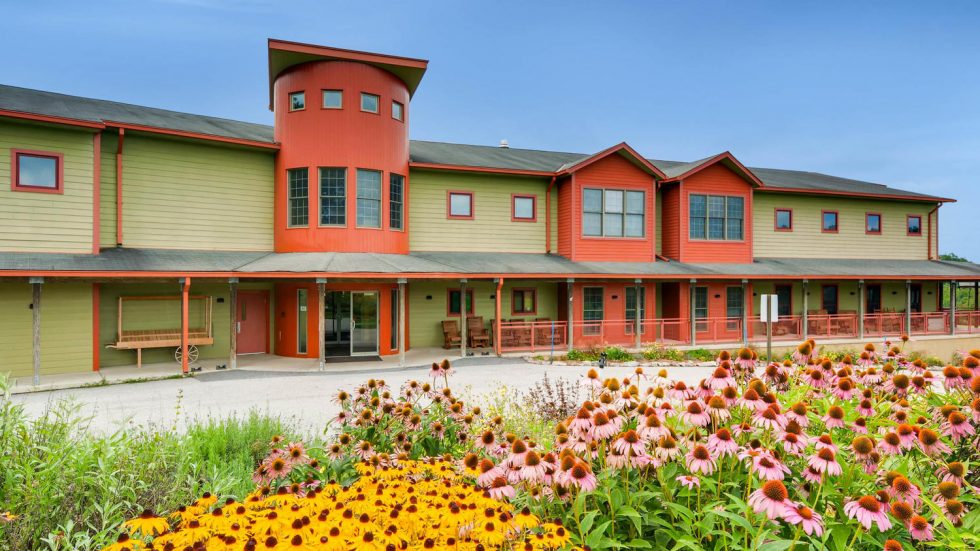


Your parking lot may be the most underused asset you own. Think about how long cars are already sitting there — during religious school, a board meeting, camp pick-up, an evening program. An hour or two is plenty of time to add real range to an Electric Vehicle (EV), which makes Jewish community buildings unusually well suited for charging installations.
Two primary options exist, and the difference is simple:
- Level 1 is a standard wall outlet (120V), adding a few miles of range per hour — fine for staff who park all day, and it can cost almost nothing to set up.
- Level 2 uses the same kind of circuit as an electric dryer (240V), adding roughly 25 miles per hour of charging, and it’s what most organizations install for members and visitors.
The value of EV chargers shows up in more ways than the direct environmental impact. Charging is a practical amenity for the people already coming to your building — members who drive in from a distance, staff who are on site all day, families making two trips for carpool.
 [Workplace EV Charger]
Installing an EV charger now can make converting your organization’s own vehicles (vans, facilities vehicles, etc.) to electric easier, as you’d already have the enabling infrastructure in place. And because it’s one of the few climate investments people actually see and touch, it tends to build internal support for the less visible work like insulation, heat pumps, or even solar.
There’s also a revenue model worth knowing about, though it suits a narrower set of organizations. Third-party developers will install, own, operate, and maintain chargers on your property at little or no upfront cost and share the revenue with you. You host; they handle the equipment, billing, and maintenance. It works best for larger lots near recreational or downtown areas, and/or where welcoming drivers from outside your organization doesn’t conflict with how you already use it. If this describes you, it’s a rare case where you can transform idle asphalt into a modest income stream while serving your neighborhood.
Where to start: ask an electrician, energy auditor, or utility whether your existing electrical panel has spare capacity. That single answer shapes the whole project and often costs nothing to learn. Then call your utility to ask about “make-ready” programs, or research state programs that incentivize EV charger deployments and frequently pay for the bulk of the cost.
Get two bids from a preferred state vendor. With federal incentives now expired, utility and state programs are coming online to continue to support the expansion of charging infrastructure – so stay abreast of new programs if one currently doesn’t exist in your region. If the numbers don’t pencil out, remember, EV chargers are eligible for Climate Action Fund grants and loans, and applications are due on November 5, 2026!
Questions? Send Greg Altman an email at greg.altman@adamah.org — he’d be happy to talk through how an EV charger installation can work for your organization.
To Learn More:
- Research state incentives: DSIRE: Database of State Incentives for Renewables & Efficiency (search by zip code; filter by Technology>Electric Vehicles>Charging Equipment)
- Electric Vehicles: An Overview for Congregations from California Interfaith Power & Light
- Adamah’s Climate Action Fund
Learn More About Funding Opportunities for EV Charging:
