




|
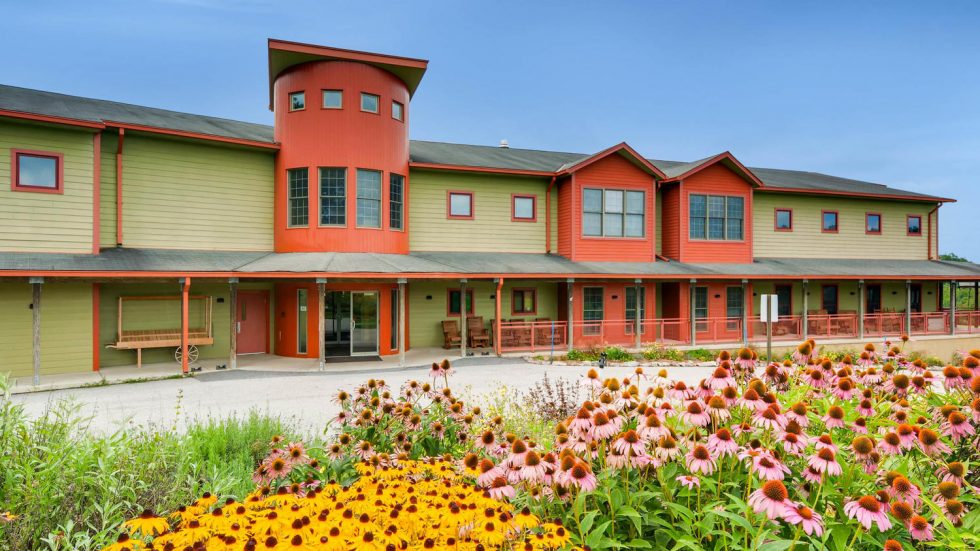
15th October | 4th Cheshvan | Jerusalem Dear All, This shabbat we read Parshat Noach, the Torah’s first big climate story. The world is overwhelmed by water. Civilization, as it previously existed, is destroyed. Noah and his family survive on “Noah’s ark” – an extraordinary floating biodiversity project that we might think of as a mammalian version of the Svalbard Global Seed Bank. When Noah finally emerges on to dry land, G!d makes a covenant not merely with humanity but with “every living creature.” The rainbow becomes its sign: never again will a flood destroy all life. The parallels with climate change today are imperfect. But the questions feel remarkably contemporary. How do we protect human civilization in the face of environmental disruption? How do we protect other species? And what responsibility do human beings have for the world? Those questions underpin the work of Jewish Climate Trust overall. They have been a central thread in the evolution of the Pearlstone Center, the home of Adamah, which celebrates its 25th anniversary in Reisterstown, Maryland this month. And they’re a backdrop to PLANETech Week in Israel. The Pearlstone Center was part of the vision of the Associated, in Baltimore, made possible by Richie Pearlstone and his family, Josh Fidler, and a slew of others. Together with Isabella Freedman in Connecticut, and a growing number of other Jewish retreat centers and farms around the country, Pearlstone provides the kind of shleimut, wholeness, that Noah’s ark points towards. The Noah story is about the necessity of individual leadership; the importance of protecting ecosystems; and the responsibility of humans to create environments that will nurture and protect the living species around us, and upon whom our lives depend. The power of Pearlstone is that it is, in its own way, a contemporary ark – a model of what vibrant Jewish life could look like, and thus an inspiration for all who are blessed to spend time there. PLANETech Week in Israel (October 18–22) is a different kind of ark. It brings together Israeli startups, investors, companies and policymakers working on technologies addressing climate change. The week includes events on energy, agriculture, waste, critical infrastructure, construction and climate resilience, as well as opportunities to see technologies in the field. Much of this is both fascinating and inspiring. At Jaffa Port, Eco Wave Power has built Israel’s first grid-connected wave-energy power station. Floaters attached to existing coastal infrastructure turn the movement of waves into electricity, which is then fed into the Israeli grid. One of the other companies being showcased is IBI-Ag, which is developing highly targeted biological insecticides using tiny antibody fragments and, increasingly, AI-designed proteins. The goal is to protect crops from destructive pests without the collateral damage associated with conventional chemical pesticides. It’s an example of something Israel does well: combining biology, agriculture, AI and entrepreneurship to tackle a real-world problem. Pearlstone and PLANETech are two very different organizations, doing very different things, 5,000 miles apart from each other. But it’s right to join the dots from the biblical story to their work – and our work – today. Jewish tradition cannot just be “religion” or myth or history. It’s not just “peoplehood” or culture or ethics or community. It has to be all those things, and a lot more. We don’t exist to (for instance) “fight antisemitism” (as necessary as, sadly, that is becoming). We exist to inherit the fullness of Jewish tradition, and strive to do what Jews have always striven to do – to build communities that are vibrant in themselves, and in which we seek to be a light to the nations. Pearlstone and PLANETech are both doing that. They’re both building and strengthening community. They’re both nourishing people and ideas, and making connections of all sorts. They’re rooted in Jewish life and the state of Israel, and firmly pointed outwards, to help create a more sustainable world for all. At JCT, we’re significant supporters of Adamah, Pearlstone’s parent; and we are newer, and rather smaller, supporters of PLANETech. We’re proud to partner with both of them. And here’s one last very important thing to read this week of Parashat Noach: on September 22nd, the Israel Innovation Authority published a major new report, Climate Resilience, Desertification and Applied Innovation. (They developed it with an international group of partners, including JCT). The report looks at how innovation in water, climate-resilient agriculture, soil restoration, environmental intelligence and renewable energy can help regions confronting desertification and extreme climate conditions – and, crucially, how we move promising technologies from pilots to implementation at scale. This matters far beyond Israel. More than 170 countries are already affected by desertification. Israel’s experience of producing food, managing water and building communities in a dry environment means that Israeli innovation could, and with some help should, make a significant contribution to climate resilience around the world. So… Parshat Noach. Its message is not that technology by itself will save us. Nor is it that human beings are powerless. We build the Ark. We plant after the Flood. And we take responsibility for the world on the other side. Shabbat shalom, Nigel
|
Pearlstone, PlaneTech & Noah’s Ark


