


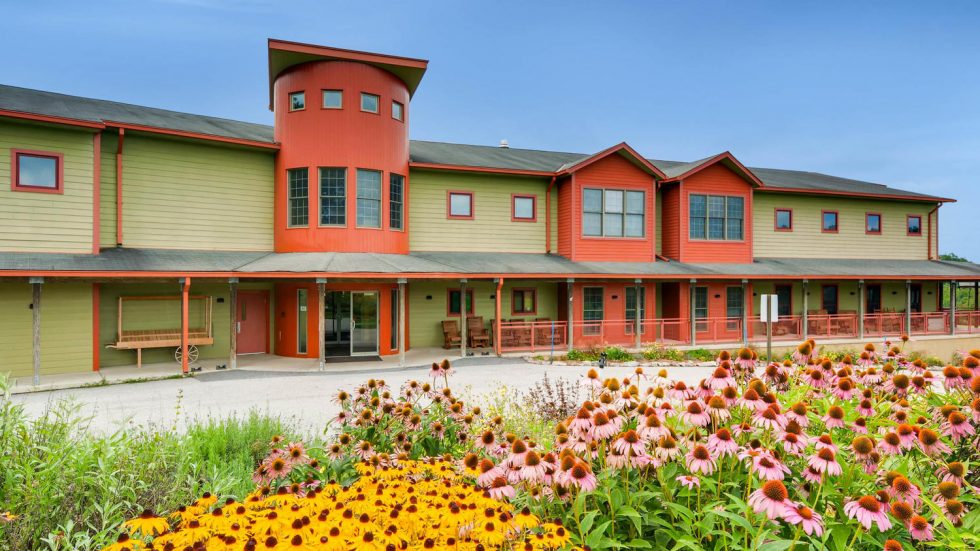


Temple Kol Ami in West Bloomfield has embraced composting at synagogue events, connecting Jewish environmental values with practical ways to reduce waste.
In May of 2024, Temple Kol Ami (TKA) committed to being almost entirely compostable after discussing it for five years. The synagogue moved from using paper products to compostable products at all events and rented three compostable cans to facilitate this action.
Adamah Detroit hosted a conversation about climate change with TKA members, focusing on how composting can impact our members and how the community could respond to those impacts. To initiate the efforts, Temple Kol Ami worked with Adamah to receive financial assistance through the Shomrei Adamah grant to purchase compostable plates and utensils for events occurring in the first year. Now, TKA has connected with Gold Star Products, a local restaurant supply company, to continue the composting effort in the congregation.
 Before TKA fully committed to composting, a bar mitzvah family took the initiative to provide compostable materials for the kiddush lunch following the service. The family made it seem easy, and announcements were made explaining that all food-related items could go into one bin. The bar mitzvah family connected with Midtown Composting (now Metro Compost and Grow) to rent big yellow bins and provided compostable plates, utensils and cups. The cost for those materials was likely more than they had hoped to spend, but taking into consideration the resultant savings for the environment, the decision was made to move forward.
After this bar mitzvah, TKA pushed ahead with composting; and the decision is not to reverse this change. The synagogue even uses compostable kiddush cups — arguably, one of the most holy, joyful and communal parts of Shabbat can now physically tie back to the earth, reminding us of the creation story and our responsibility to care for the earth.
Why Compost?
The congregation made these changes in how they dispose of food-related items for many reasons. Practically speaking, according to the United States Environmental Protection Agency, as of 2018, food waste makes up a quarter of all landfills. It is predicted that from 30% to 40% percent of the U.S. food supply is wasted; and 95% of that discarded food ends up in landfills. As a result of food discarded in the landfill, the resultant food waste then turns into methane because of its quick decay rate. According to the Natural Resources Defense Council, methane is 80 times worse for the environment than carbon dioxide because of its short-term effects. Moving to composting would drastically reduce our food waste, reducing emissions in the short term as a result.
 Importantly, the rationale behind our composting endeavors was also founded on the Jewish value of bal tashchit, the biblical mandate against wanton destruction that prohibits wasting or destroying useful items. This value serves as an ancient baseline for conservation and sustainable resource use.
TKA members, especially those on the Social Action Committee and Green Team, thought there was too much food and paper going to waste when it could be repurposed if we used compostable materials and turned leftover food into compost.
For example, the TKA pantry discards its overripe food into a compost bin, giving the members a chance to give back to the environment in addition to giving back to the community.
Judaism encourages us to preserve our natural resources to generate new ones for future generations. By using compostable materials, we are continuing the cycle of regeneration. We are literally taking our food waste and putting it back into the earth to grow new plants.
Our sacred texts teach that we have an obligation to improve and sustain the world for future generations. For example, the Talmud tells a story where Honi plants a tree that will bear fruit after he is deceased. Honi is not planting the tree for himself, but for his children.
Around the same time TKA went compostable, my family and several congregants added a compost bin in our homes to help reduce food waste. The implementation was easy due to a partnership with Metro Compost and Grow, which offers pickup of composting for homes and businesses as often as once a week or as infrequently as once a month. The company supplies each customer with a bucket or a large compost can with liners, depending on the family’s need. In the spring, customers who request it can receive bins of composted soil to be used in their gardens. In effect, each customer can continue the cycle of regeneration in their own home and garden.
Our efforts at TKA are just one small example of how our community can be a shining example of the mitzvah of bal tashchit, not only for our synagogue building, but our actions can also extend out into our community.
Rabbi Natalie Shribman serves as the rabbi at Temple Kol Ami and as an engaged environmental leader in the Adamah Detroit Network.
This article was originally posted The Detroit Jewish News.