




Friday evening, September 25, 2026 · Erev Sukkot 5787, Originally Posted on Temple Hillel B’nai Torah’s Blog
Before anyone said a word about kilowatts or grants, the HBT band had us singing. They opened with “Olam Chesed Yibaneh,” Rabbi Menachem Creditor’s setting of Psalm 89:3, and its refrain kept coming back: I will build this world from love. By the end of the night, that line described exactly what we had done.
We gathered on Erev Sukkot, as Shabbat and the festival arrived together, to celebrate a new roof and the 126 solar panels on top of it. A nor’easter moved the whole evening indoors, which only sharpened the point. On a holiday about shelter, we sat under a roof that now shelters us and, soon, will power us too.
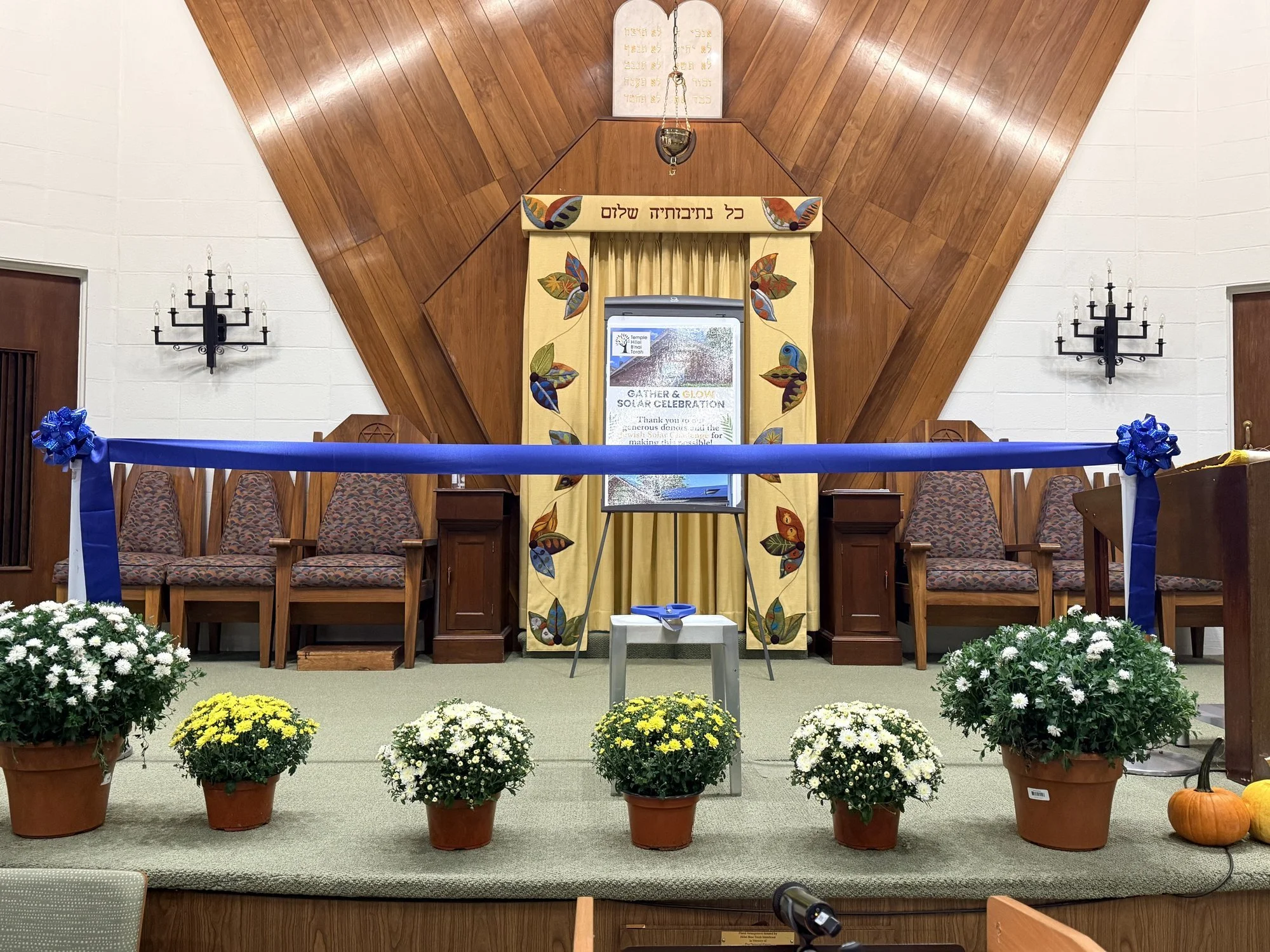 Set and waiting, before anyone arrived. Photo: Rahel Gruenberg
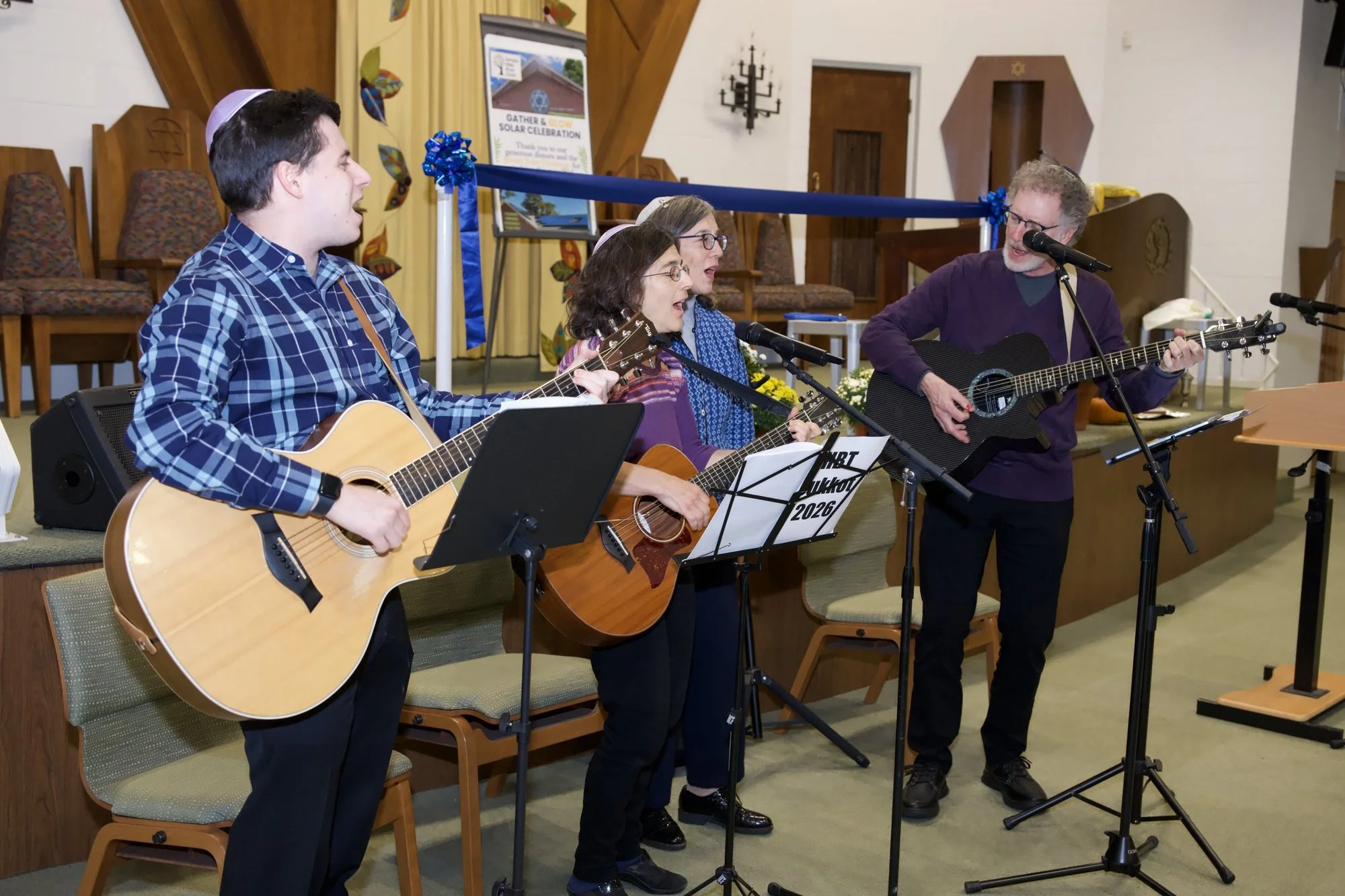 The HBT band opens the evening with communal singing.
You did this, HBT
Co-president Jason Arenburg championed this project from the start, and he told its story plainly. Our roof urgently needed repair. We didn’t have the money to replace it. We bought all our power, and an oil furnace heated our offices and classrooms. The idea was to fix the roof, make our own electricity from the sun, and use heat pumps to heat and cool the classroom and office building.
Then the community stepped up. Eighty-nine individuals and families gave $60,000. The Jewish Solar Challenge, a project of the Schwartz-Rosman Foundation, added a $40,000 matching grant. Together, that grew the plan from 97 panels to 126. Jason got choked up as he said it again and again: “You did this, HBT.”
- 126 solar panels on our new roof
- 89 individuals and families gave $60,000
- $40,000 matching grant from the Jewish Solar Challenge
- 54.8 kWkilowatts system capacity
- 63,640 kWhkilowatt-hours expected clean power each year
- ~About30 tons of CO₂ avoided each year (estimate)
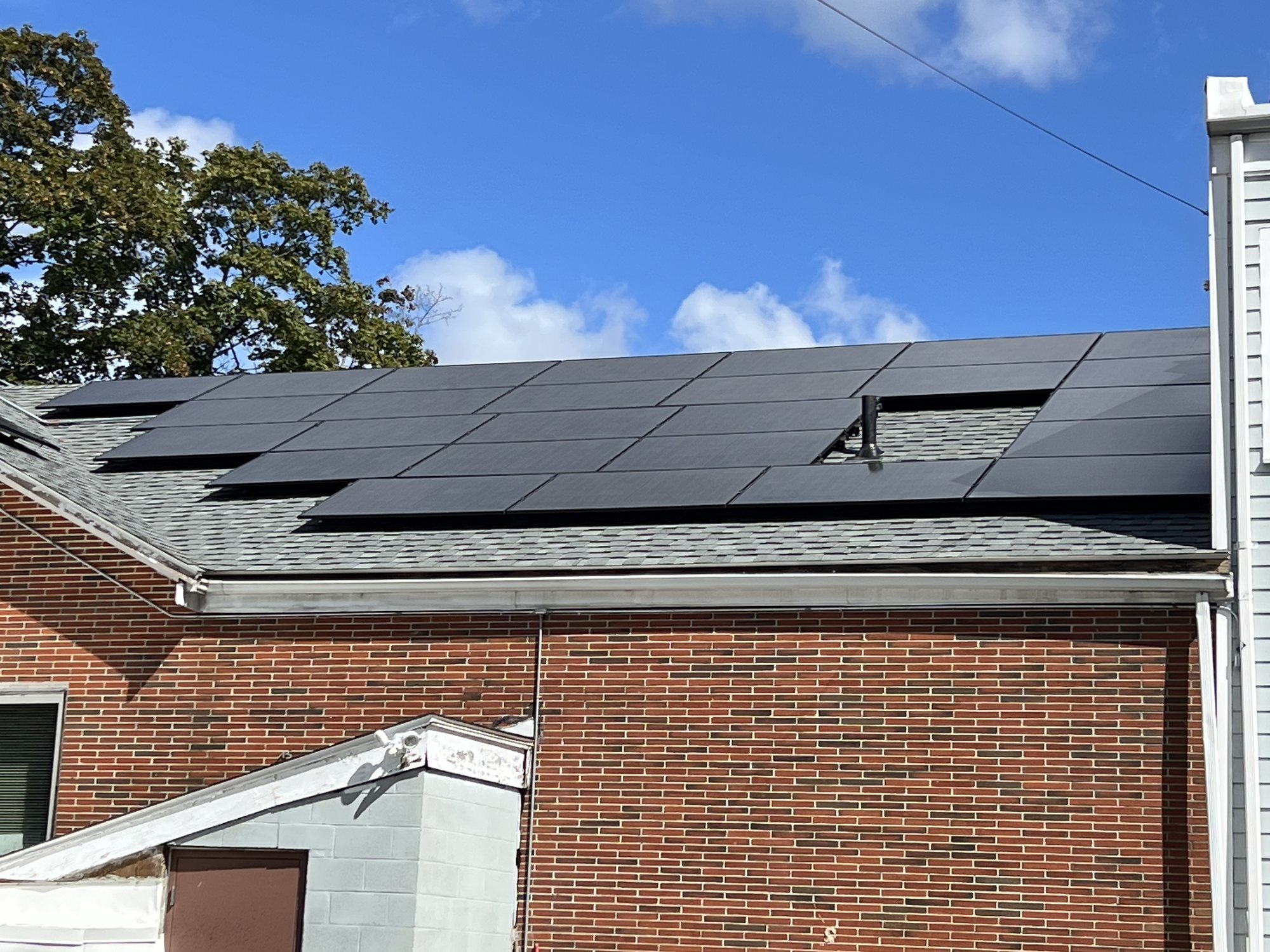
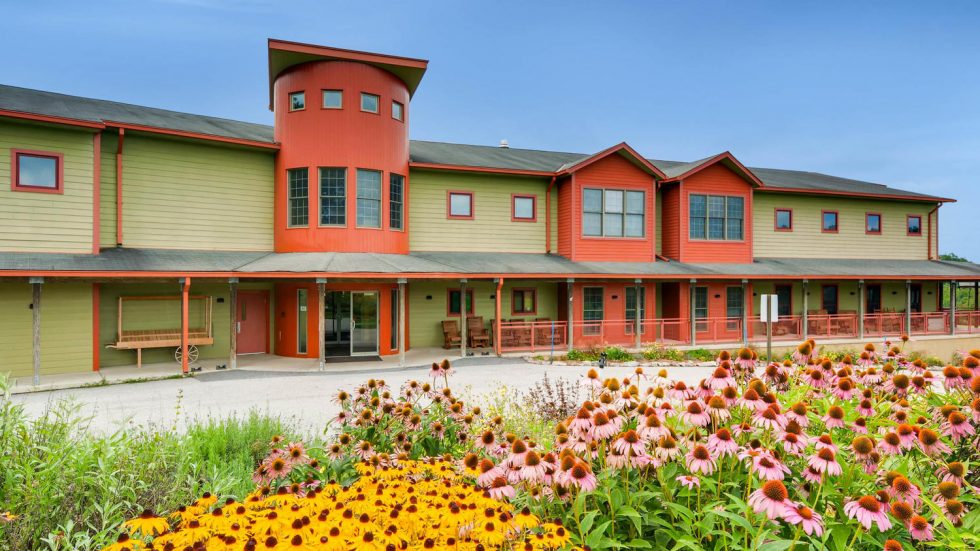
Where things stand. On the night of the ceremony, the panels were installed and waiting for permission to operate, with the city inspection scheduled for the following Monday. The production and carbon figures above are projections; we use “about 30 tons of CO₂ a year” until we have a full year of real numbers. The heat pumps serve our classroom and office building. The sanctuary isn’t electrified yet, and the array is expected to cover nearly all of our annual electricity use.
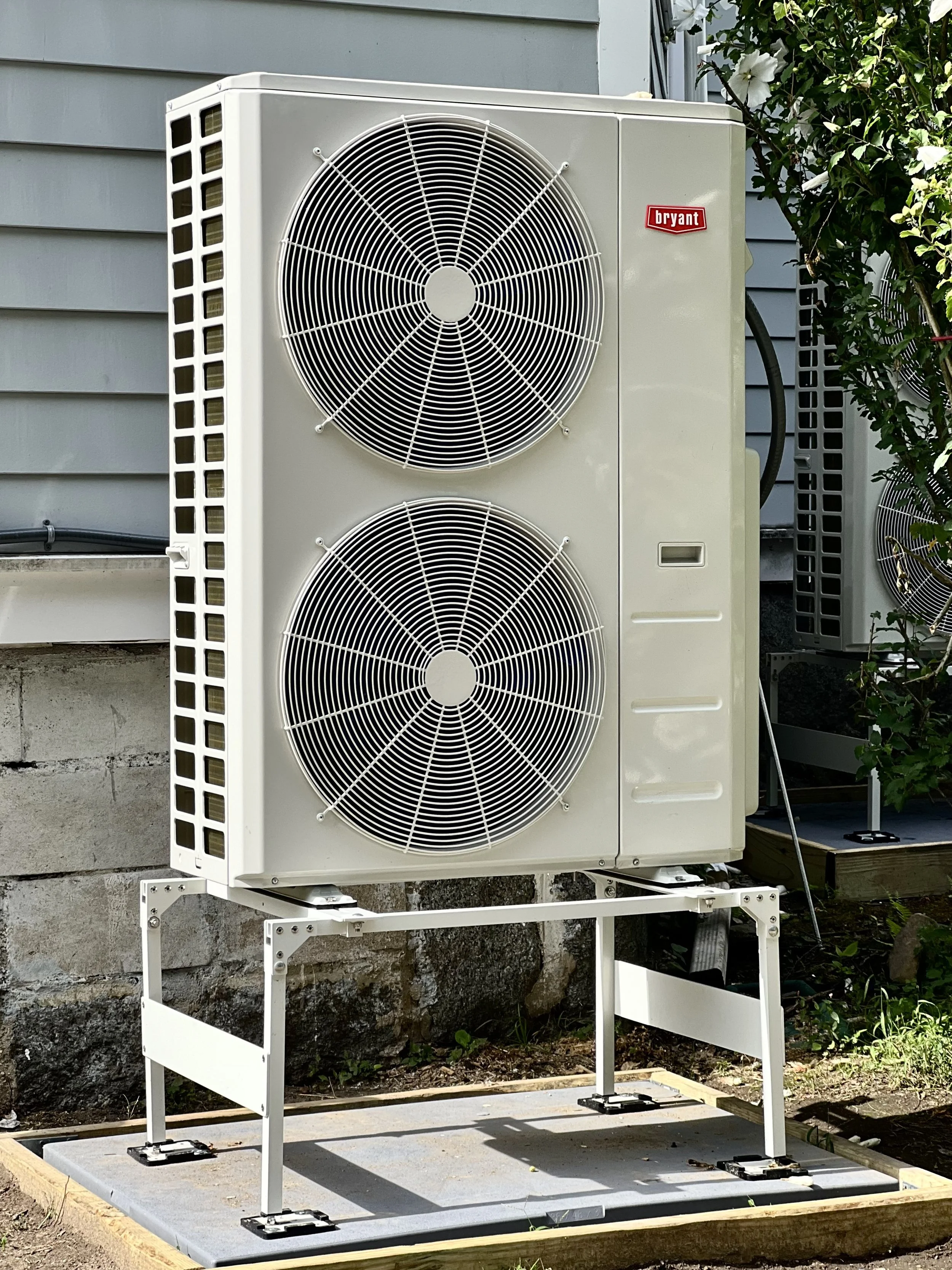 New heat pumps now heat and cool our classroom and office building.
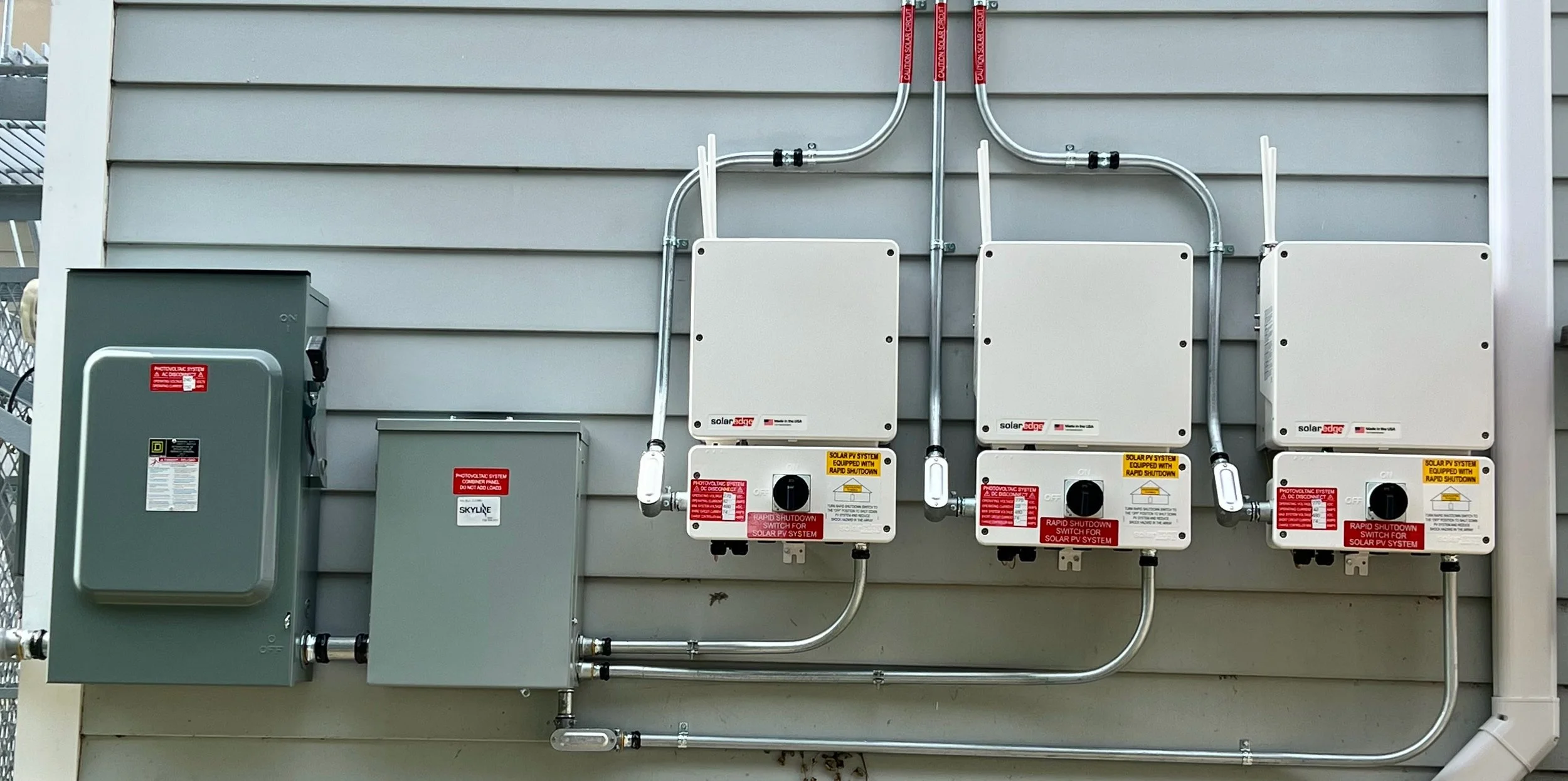 Where our solar power comes into the building.
What we heard
Nobody coordinated their remarks, but our speakers kept returning to the same few ideas: the sukkah and the roof, what the sun means, and tikkun olam you can actually see. Beneath them all ran one more: this was Temple Hillel B’nai Torah’s doing. Our community gave, planned and built it together, becoming a role model for the wider Jewish community.
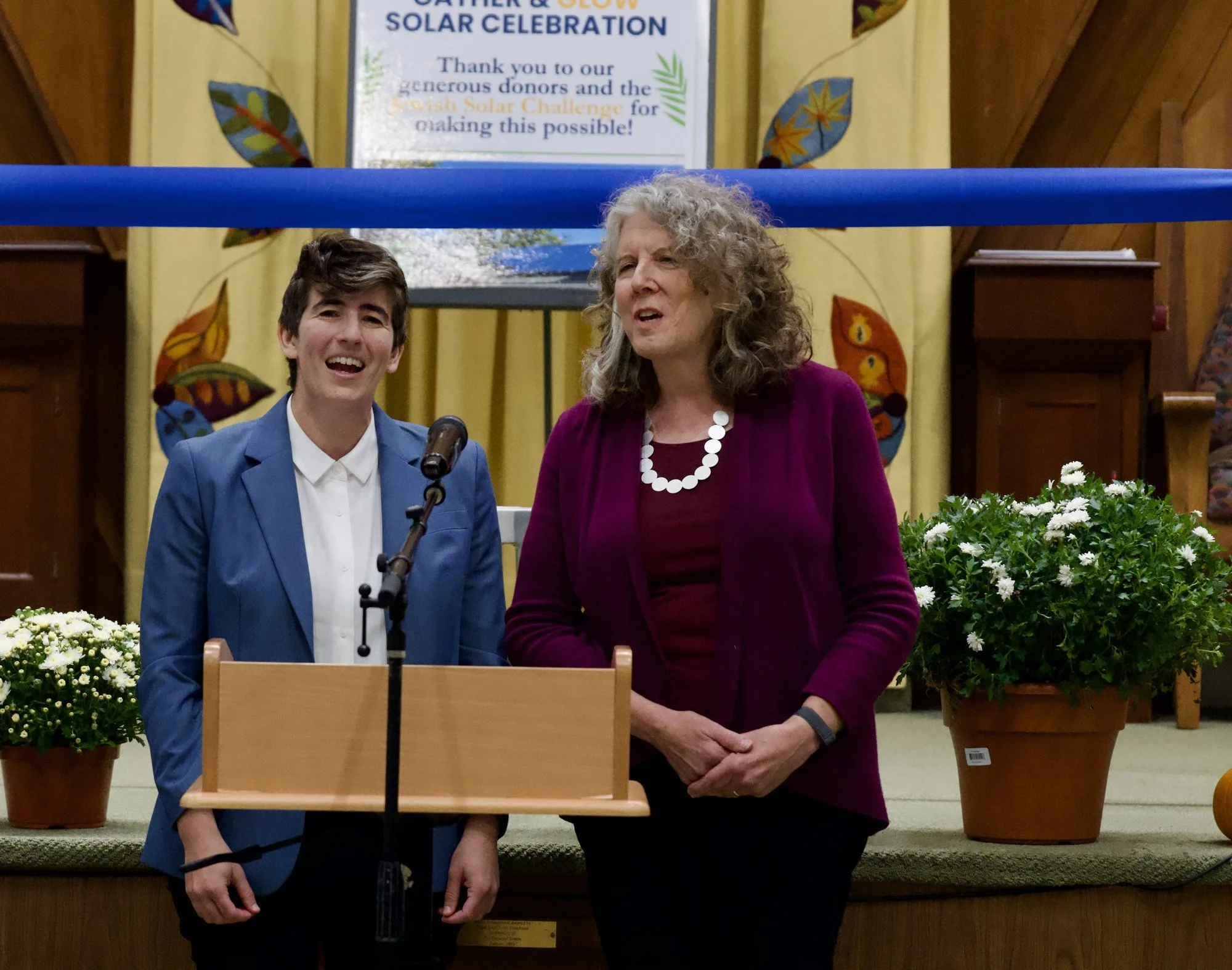
Rabbi Aliza Schwartz, with Rabbi Emerita Barbara Penzner
Rabbi, Temple Hillel B’nai Torah
Rabbi Aliza began with being in “right relationship” with the sun and the world, drawing on the creation story and Jewish teaching about land and trees. She named tikkun olam as one of our four pillars and said our building itself now embodies that work. Then she and Rabbi Emerita Barbara Penzner led Ufros aleinu sukkat shlomecha, a prayer for a shelter of peace. For a week we live in a fragile sukkah; then we come home to this building, under our new roof.
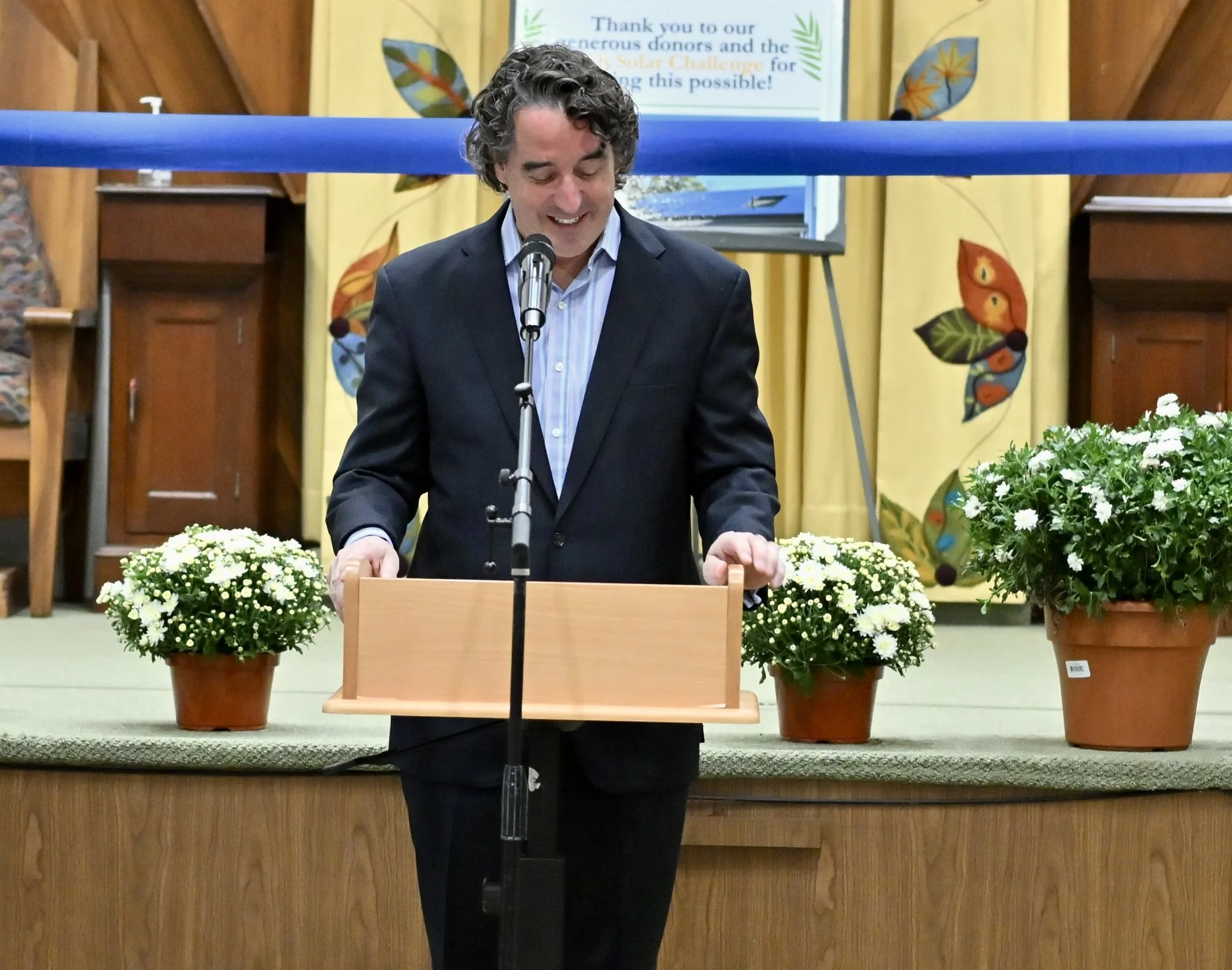
Jason Arenburg
HBT Co-President
Jason welcomed us to three occasions in one room: Shabbat, Erev Sukkot, and the celebration of 126 solar panels on our roof. He asked us to look up at the panels, particularly on sunny spring days, and feel proud of our contribution. He explained that the original plan was to install 97 panels, but the support from the Jewish Solar Challenge enabled us to expand it to 126 panels.
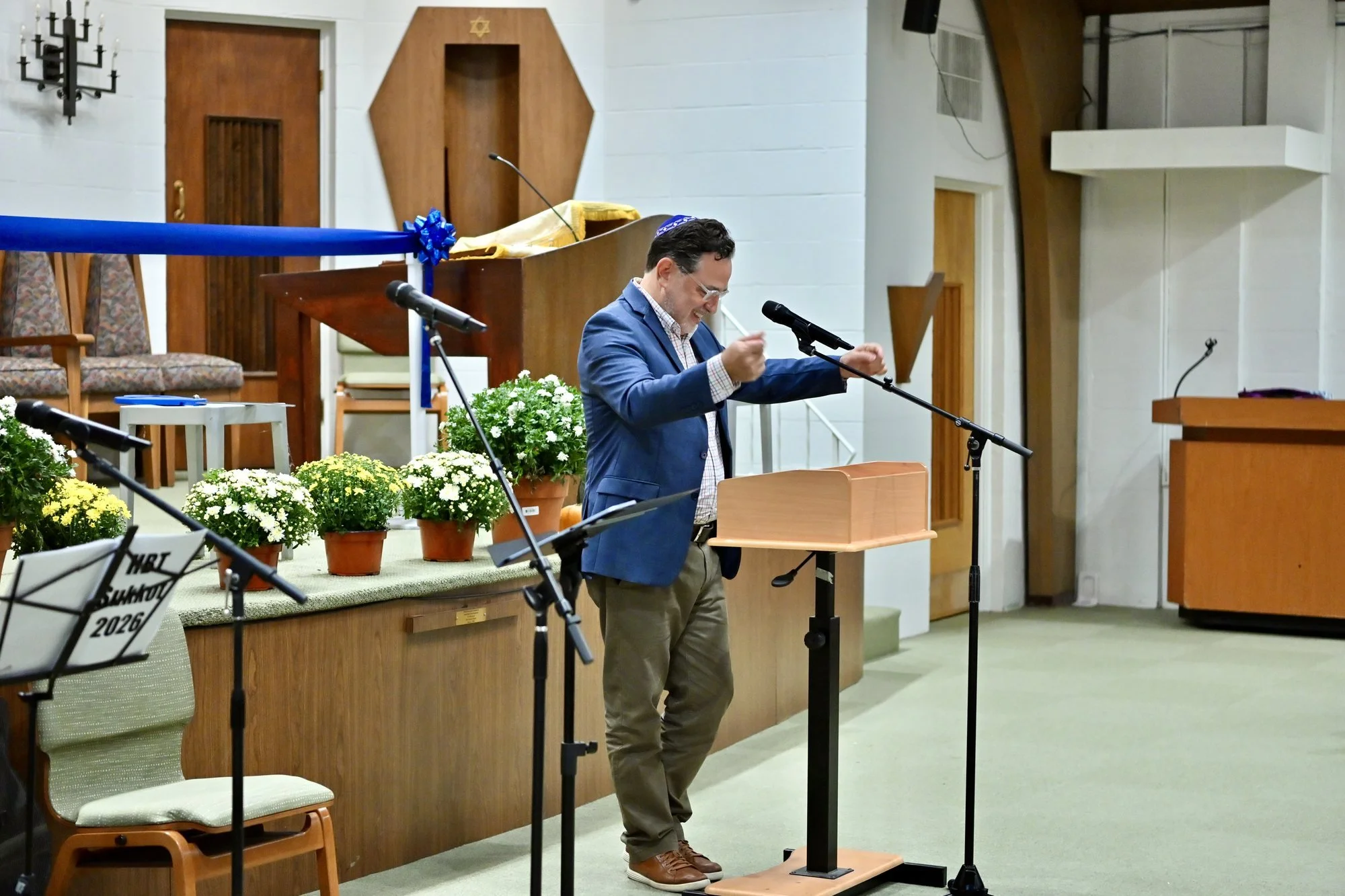
Michael Kadish
Jewish Solar Challenge
Michael shared the Jewish Solar Challenge’s hope to see every Jewish institution in North America powered by the sun: synagogues, JCCs, camps and schools. He pointed out that anyone in our parking lot, including every child, can now see our values on the roof.
“We hope that what you’ve done inspires other institutions around Boston and the country to follow your lead.”
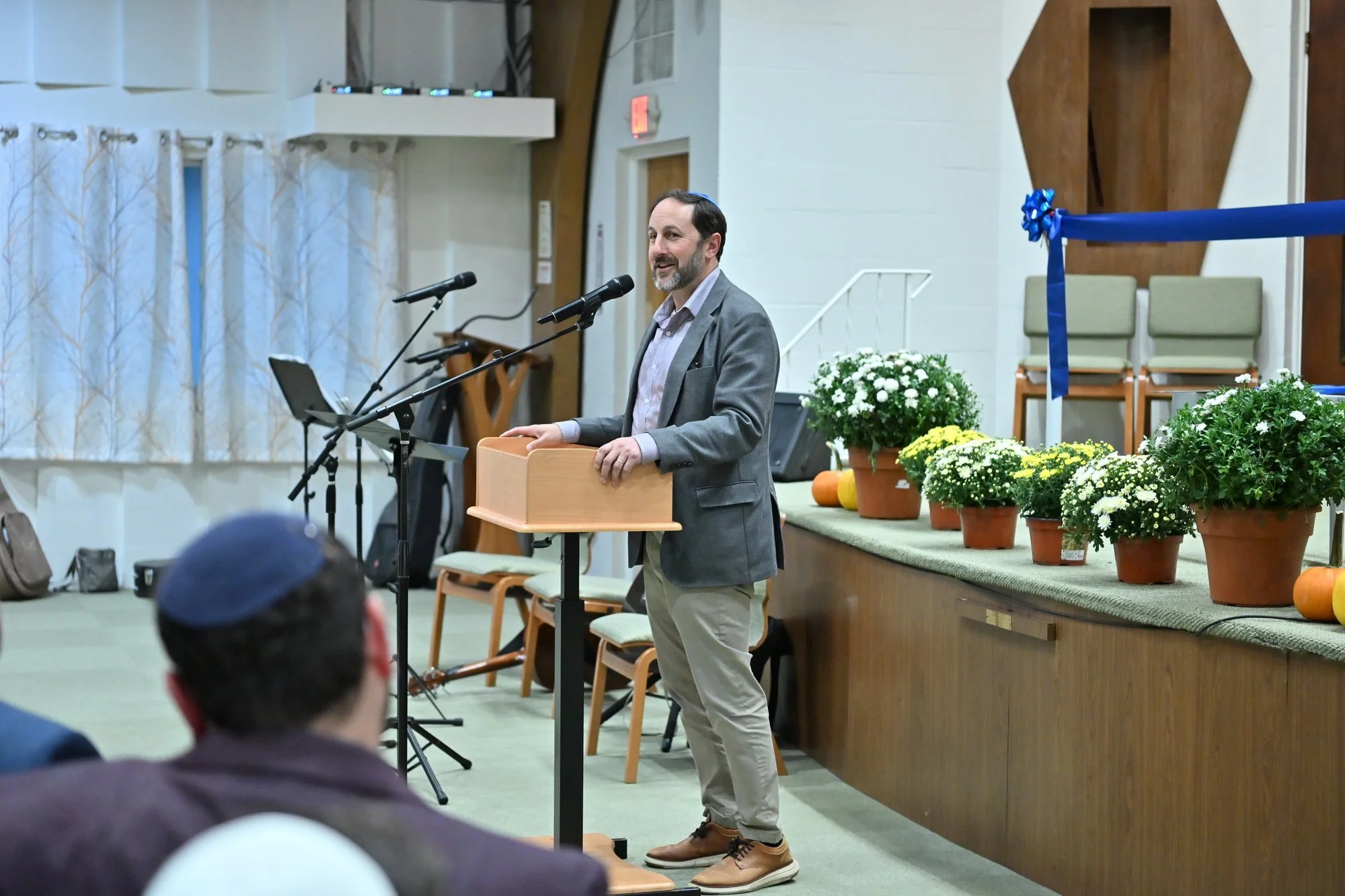
Boston City Council
Councilor Weber turned to Deuteronomy 20:19, which forbids cutting down fruit trees during a siege, and called trees “nature’s solar panels.” Jason agreed he had “stuck the landing.” Then Sukkot’s temporary shelter led him somewhere harder: Boston children without stable housing. He cited a recent City Council hearing and his figure of about 5,000 Boston Public Schools students who experience homelessness in a year.
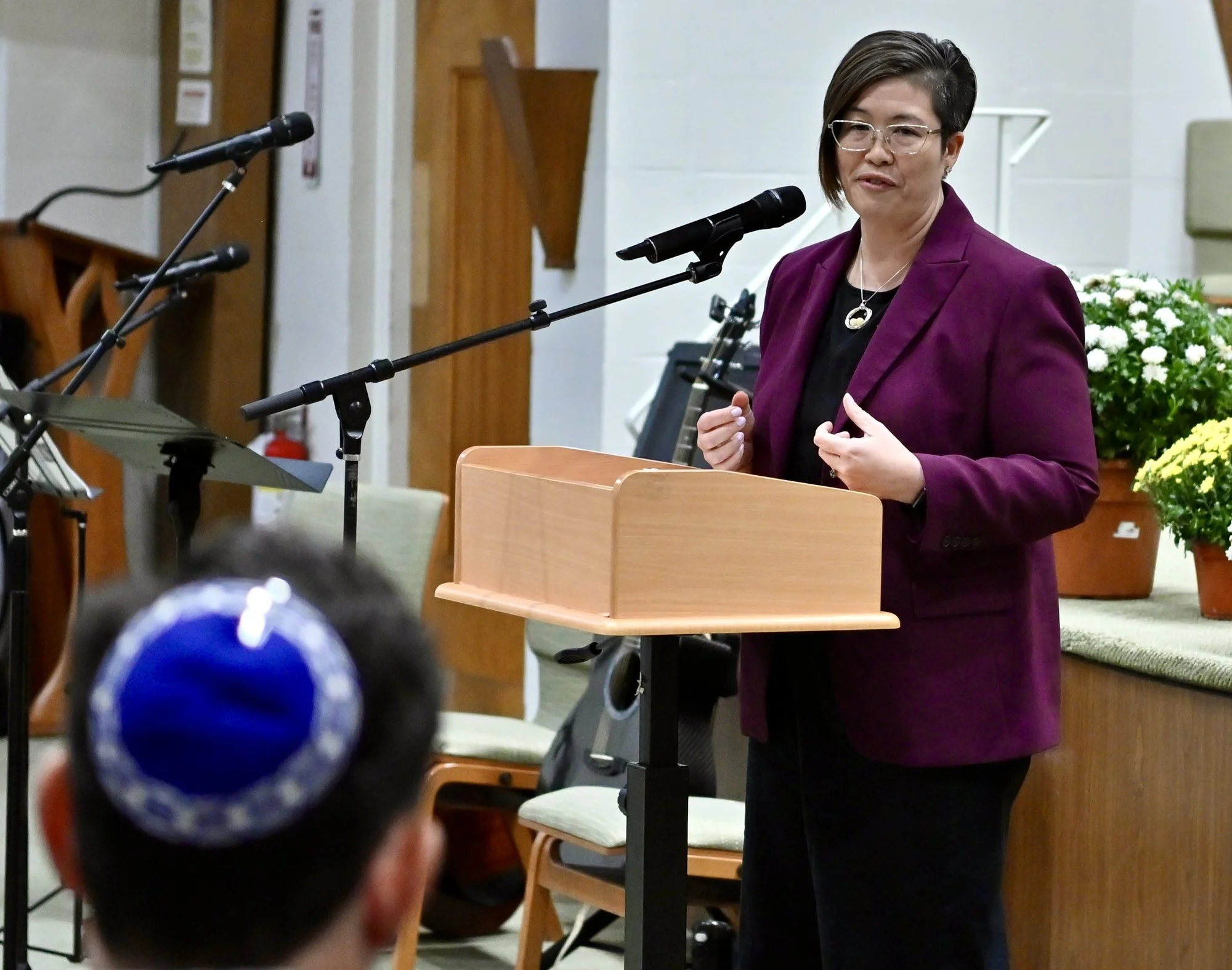
Persis Yu
Democratic nominee for the Massachusetts Senate (Norfolk and Suffolk District)
Persis Yu was candid that this is a hard moment for clean energy, with public support for solar and wind shrinking and Boston facing a warming climate and rising seas.
“The solve for everything is community. It is community engagement, it is community action, people coming together.”
She thanked HBT “for being a literal light in the dark times.”
Temple Hillel B’nai Torah is a 501(c)(3) nonprofit and does not support or oppose any candidate for public office. Guest speakers’ remarks are their own.
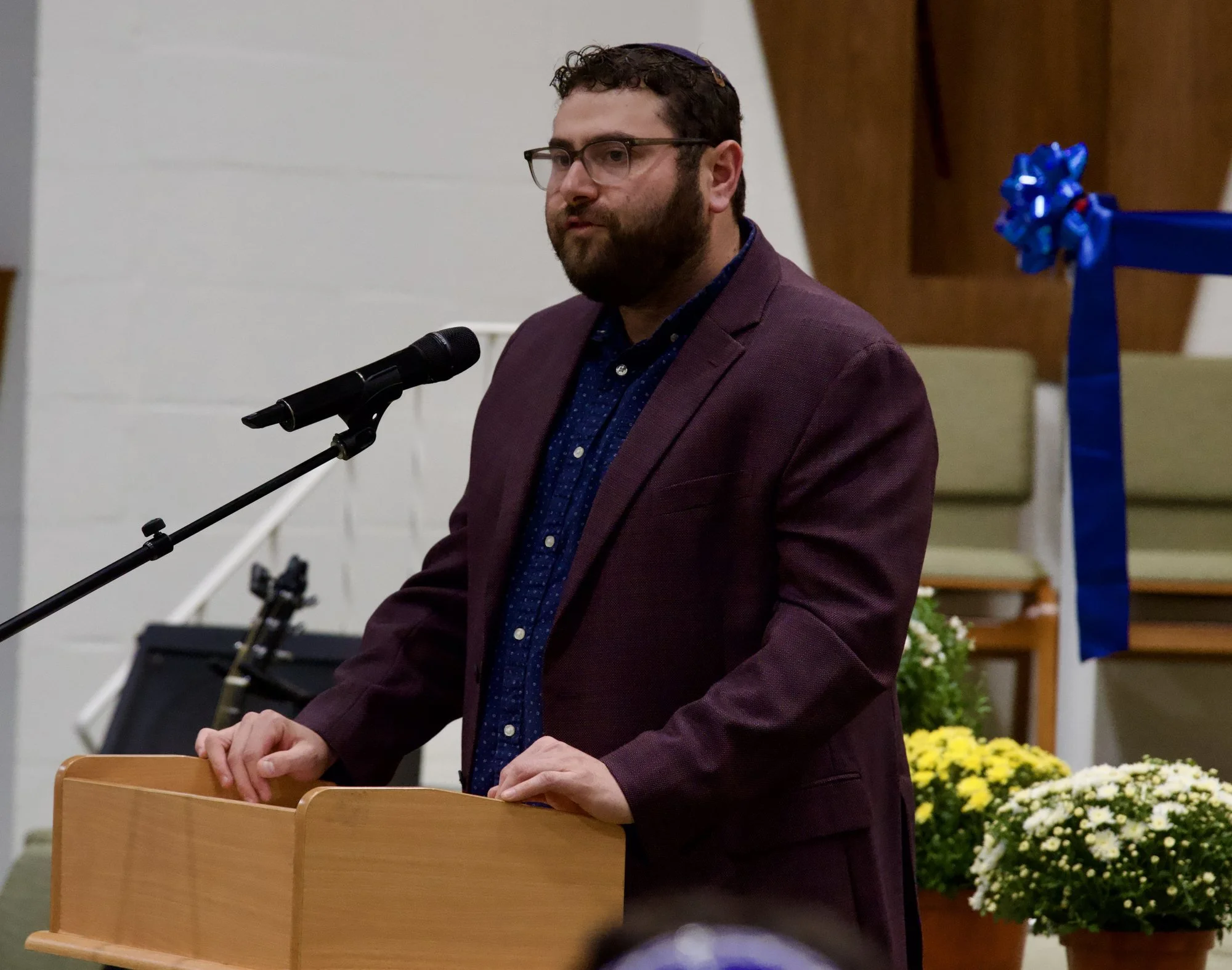
Noah Weinberg
Founding Director, Adamah Boston
Many of us know Noah as the musical prayer leader at TBZ in Brookline, and he’s a longtime friend of Rabbi Aliza. He came to us as the founding director of Adamah’s new Boston hub, and, as he told us himself, a farmer: for the last ten years he farmed at Gann Academy in Waltham.
Noah welcomed HBT into Adamah’s Jewish Climate Leadership Coalition and brought us back to Sukkot: z’man simchateinu, the season of our joy, and chag ha’asif, the festival of ingathering. Now we can harvest the sunlight that has always fallen on our building. But a sukkah lets the wind through, and from a decade of farming he described drought, flood, heat waves and surprise frosts. His hope: Jewish communities that are joyful, resilient, and deeply connected to the earth and to one another. At dinner, he hosted a table on earth-based Judaism and local plants.
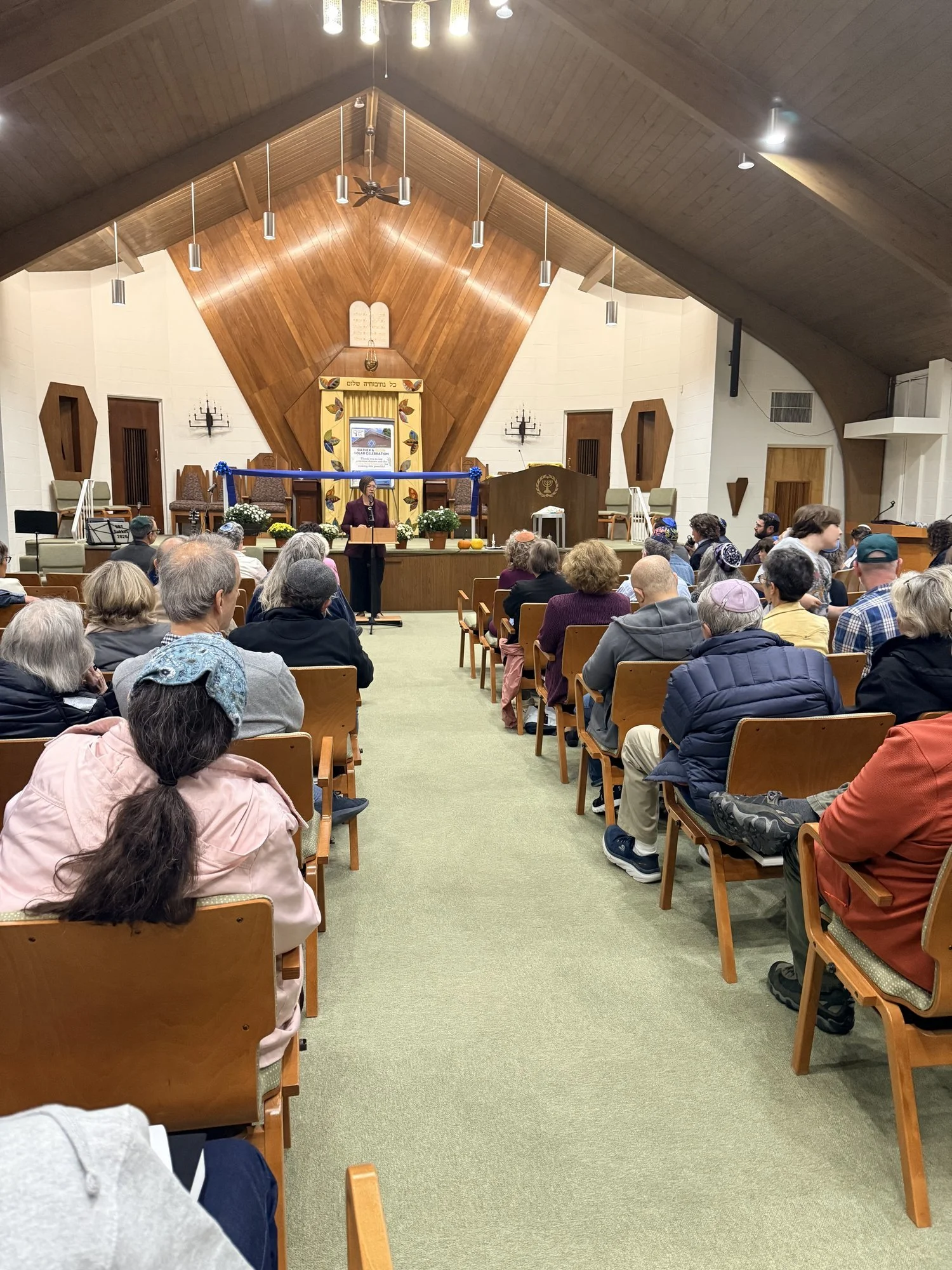 A full house, braving the nor’easter. Photo: Rahel Gruenberg
The ribbon, then Shabbat
Jason called the speakers and Rabbi Barbara up to the bimah. There was a count-in, a call for a backbeat, and the whole room clapping as the band led “Let the Sunshine In,” then “Siman Tov u’Mazel Tov.” The ribbon was cut with all of us singing.
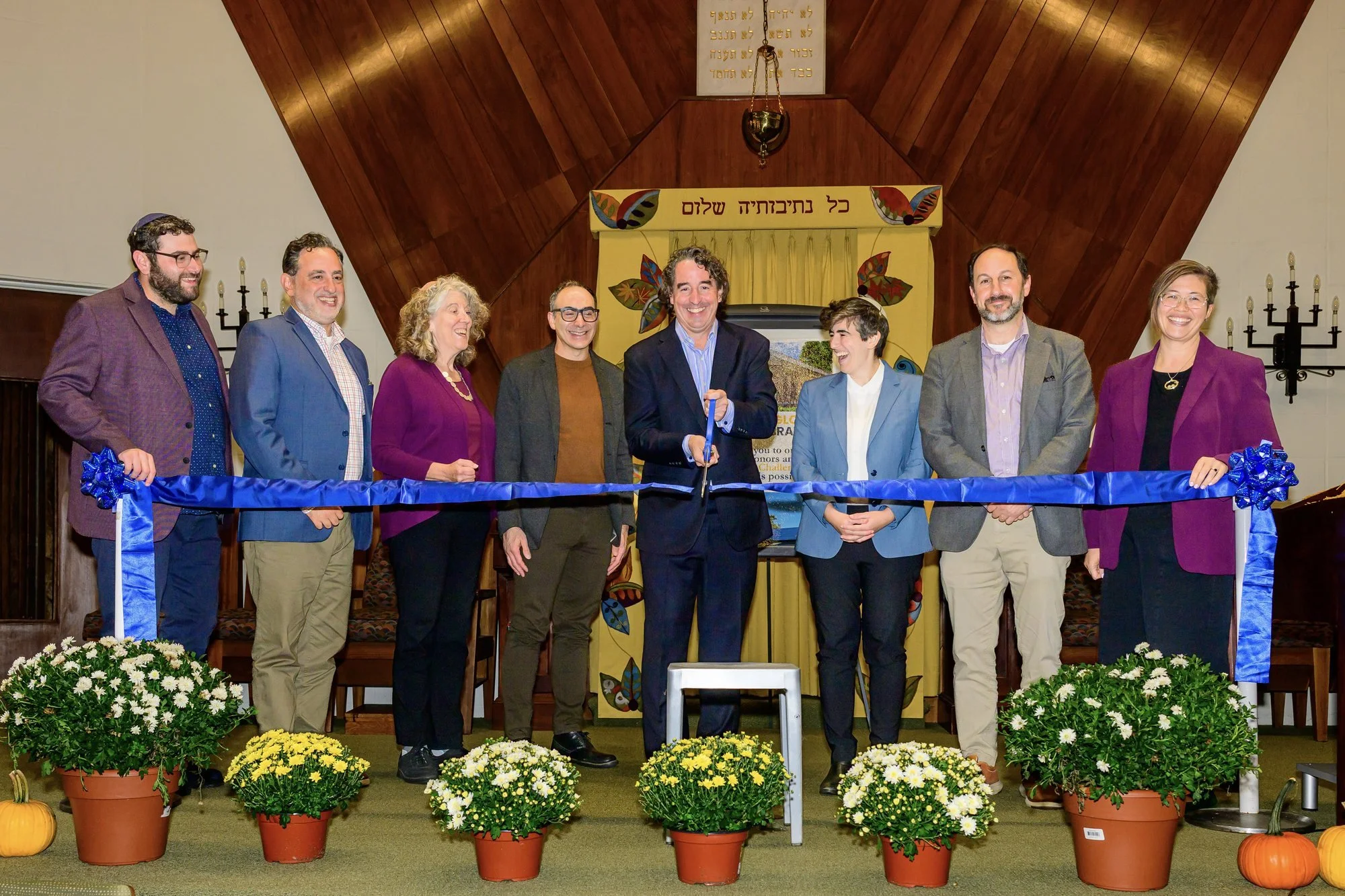 Cut…
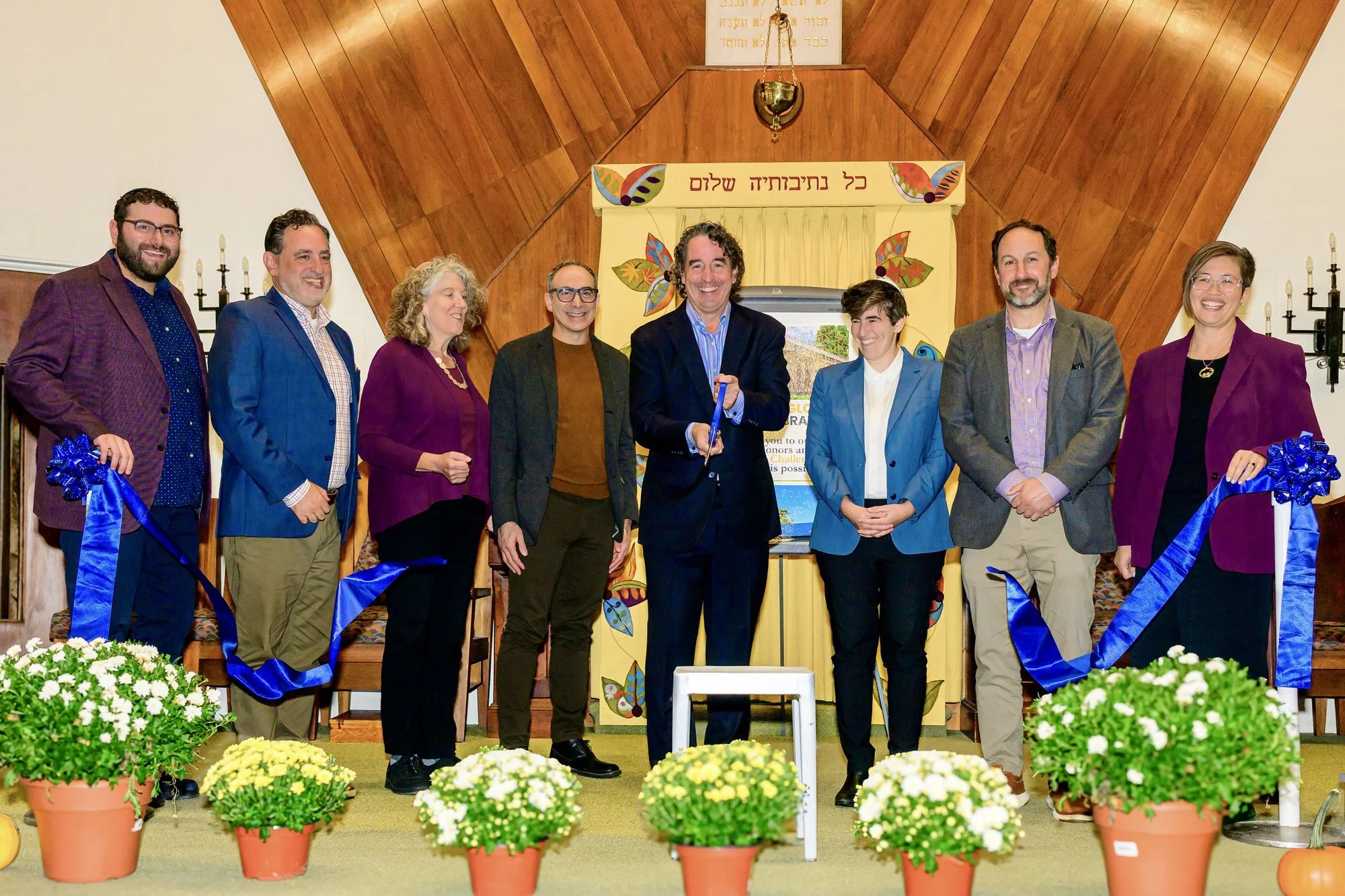 …and action!
The celebration didn’t end when the ribbon was cut. Rabbi Aliza welcomed Shabbat and Sukkot with candles, wine in a Sukkot melody, and a Shehecheyanu for arriving at this moment with our new roof. (With the storm keeping us inside, we skipped the blessing for sitting in the sukkah and hoped for dessert out there later.) Then she asked us to come close and connect to someone connected to the challah, “energetically or physically.” That was the whole evening in one picture. The bread comes from the earth, and the earth’s harvest grows from the same sunlight our roof now gathers. “Turn! Turn! Turn!”, with its words from Kohelet, the book we read on Sukkot, sent us downstairs to dinner.
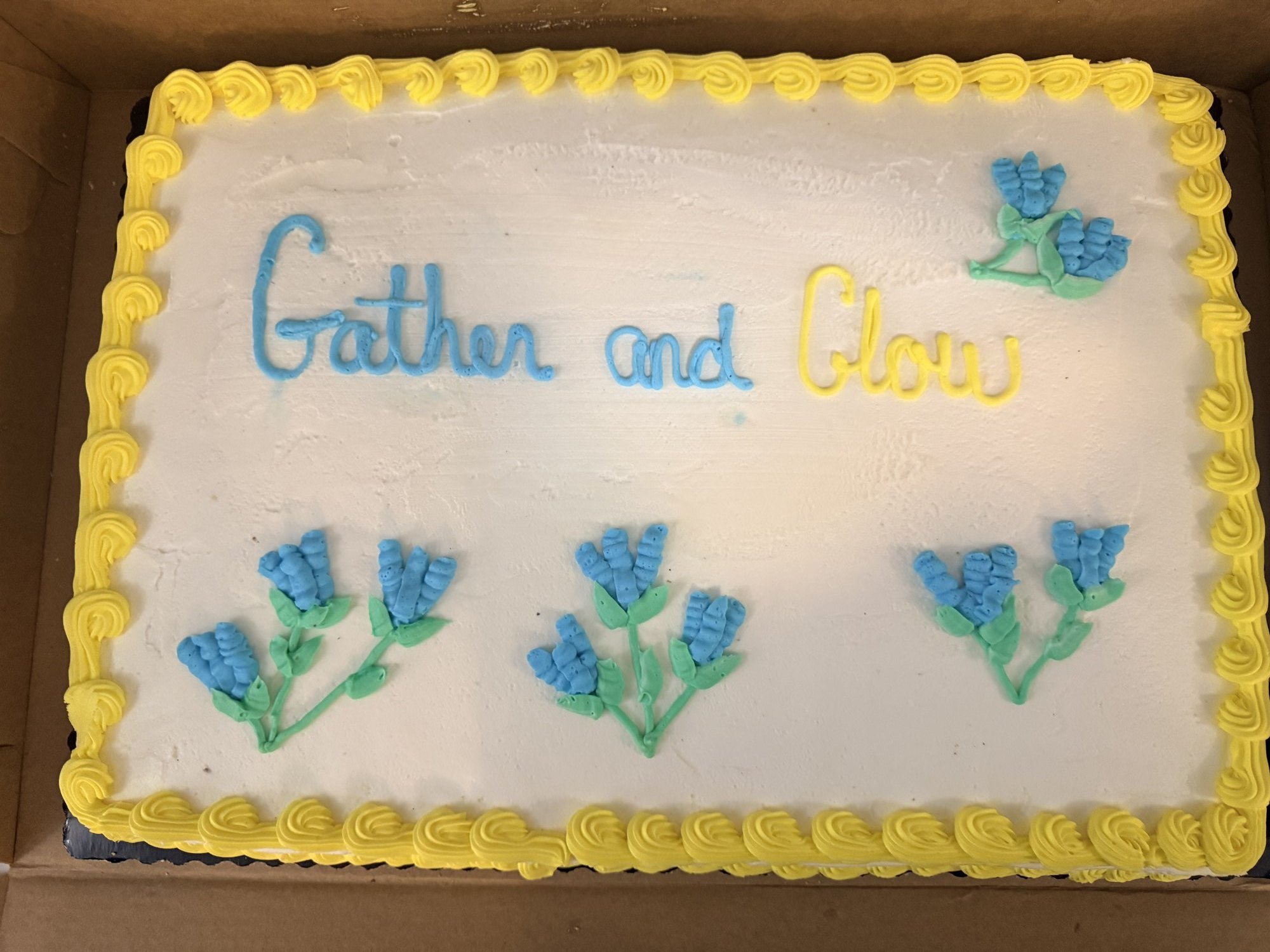 Dessert, Gather & Glow style. Photo: Rahel Gruenberg
Many hands
Rabbi Aliza thanked Jason for his “moral leadership”: he brought the idea to a board meeting, stayed with the research, and stood in the parking lot during construction. She thanked our fundraising co-chairs, Rahel Gruenberg and Raquel Rosenblatt, fondly known as “R-squared,” and Jessica Williamson, a central planner of the evening. Our thanks also go to the fundraising committee, the board, the HBT band (Cantor Jeff Klepper, Susannah Sirkin, Sharin Horvitz-Chung and Noah Simon), and every one of the 89 households who gave. National partners matter, but a project like this happens because particular people research, raise money, solve problems and show up.
Looking ahead
Sukkot, our solar anniversary
From this year on, Sukkot is also the anniversary of our solar panels. It’s a fitting pair. Sukkot is the festival of shelter and harvest, and our new roof now does both: it shelters us, and it harvests the sun.
Every fall, as we build the sukkah and remember how fragile shelter can be, we can look up at the roof that shelters us and powers us, and give thanks for both. Next Sukkot brings our first full year of real production numbers, and we’ll share them.
As members of Adamah’s coalition, we’ll name a climate liaison and file a Climate Action Plan before Tu B’Shvat. And the sanctuary is still waiting for its turn to go electric. The work isn’t finished, and that’s part of the good news.